




Bon Voyage
Volatile energy prices, geopolitical uncertainty and supply chain bottlenecks have taken a toll on the vast advancements made in globalisation and international trade in the last century. Sanctions imposed on China & Russia combined with rapidly increasing diplomatic ties between BRICS & OPEC is increasing the risk of a global trade divide into geopolitical blocs. The United States and Europe are seeking to ensure access to crucial materials and energy through reducing oil dependency, which has also been a prominent driver of inflation. The Inflation Reduction Act of 2022 is the most significant climate legislation in U.S. history, offering funding, programs, and incentives to accelerate the transition to clean energy infrastructure. The largest investments in the United States will therefore be directed towards energy production ($900 billion by 2023), followed by electrification and modernization of distribution networks ($600 billion). Transport consumes 70% of the oil imported into Europe and accounts for 21% of greenhouse emissions, 50% of which is attributable to road freight transport. The next world of logistics must integrate renewable and technological measures to combat the industries restraints on efficiency, oil dependency as well as its major environmental impacts.
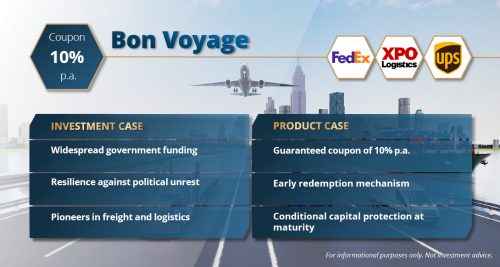
To benefit from this trend, we have embedded into a barrier reverse convertible 3 stocks that have made some of the furthest progressions into green logistics.
FedEx (FDX UN) is a world leading logistics, e-commerce, and freight transport titan, who have made major sustainability reforms following their $2 billion plan for carbon neutrality by 2040. With an ever-growing fleet of green vehicles worldwide and over 20 FedEx express buildings recognized for sustainability, the firm has been a prominent driver of eco-friendly practices in the industry. FedEx ended fiscal 2023 with revenues of $90.2 Billion, an adjusted EPS of $14.96 and returned $2.7 Billion to stockholders through stock repurchases and dividends. FedEx brags one of if not the greatest progressions in logistics technology, with impressive developments in driverless deliveries, AI shipment initiation, drone deliveries, logistics software and many more.
XPO Logistics (XPO UN) is a leading freight transport and supply chain solutions firm who have partnered with blue-chip companies across the globe. XPO is leading the pack when it comes to prioritizing sustainability in the supply chain. XPO is working to expand its biodiesel and renewable diesel pilot programs to 5 U.S states in the coming year, helping the company cleanup about 25% of its fuel consumption. Their projects include the first fully electric trucks in their French and Spanish fleets, in partnership with Renault and Volvo Trucks, as well as an exclusive distribution contract by Element 2, a fast-growing retailer of hydrogen fuel for UK commercial road fleets. They are also currently deploying EcoTransIT, which has become the world's most widely used software to track harmful emissions.
UPS (UPS UN) is a multinational shipping & receiving, supply chain management firm which is one of the world’s largest shipping couriers. The firm announced Q1 2023 Revenues of $22.9 billion as well as adjusted EPS of $2.20. UPS has set a carbon-neutral goal for 2050, with benchmarks dotted along the 27-year road to 2050, including using 40% renewable fuel in its fleet by 2025. By 2035, they have their eyes set on reducing the carbon intensity of a package by 50%, and by the same year, sustainable aviation fuel will comprise 30% of the airline’s fuel mix.
BRC Autocallable | Product Snapshot
For informational purposes only. Not investment advice.
Volatile energy prices, geopolitical uncertainty and supply chain bottlenecks have taken a toll on the vast advancements made in globalisation and international trade in the last century. Sanctions imposed on China & Russia combined with rapidly increasing diplomatic ties between BRICS & OPEC is increasing the risk of a global trade divide into geopolitical blocs. The United States and Europe are seeking to ensure access to crucial materials and energy through reducing oil dependency, which has also been a prominent driver of inflation. The Inflation Reduction Act of 2022 is the most significant climate legislation in U.S. history, offering funding, programs, and incentives to accelerate the transition to clean energy infrastructure. The largest investments in the United States will therefore be directed towards energy production ($900 billion by 2023), followed by electrification and modernization of distribution networks ($600 billion). Transport consumes 70% of the oil imported into Europe and accounts for 21% of greenhouse emissions, 50% of which is attributable to road freight transport. The next world of logistics must integrate renewable and technological measures to combat the industries restraints on efficiency, oil dependency as well as its major environmental impacts.
To benefit from this trend, we have embedded into a barrier reverse convertible 3 stocks that have made some of the furthest progressions into green logistics.
FedEx (FDX UN) is a world leading logistics, e-commerce, and freight transport titan, who have made major sustainability reforms following their $2 billion plan for carbon neutrality by 2040. With an ever-growing fleet of green vehicles worldwide and over 20 FedEx express buildings recognized for sustainability, the firm has been a prominent driver of eco-friendly practices in the industry. FedEx ended fiscal 2023 with revenues of $90.2 Billion, an adjusted EPS of $14.96 and returned $2.7 Billion to stockholders through stock repurchases and dividends. FedEx brags one of if not the greatest progressions in logistics technology, with impressive developments in driverless deliveries, AI shipment initiation, drone deliveries, logistics software and many more.
XPO Logistics (XPO UN) is a leading freight transport and supply chain solutions firm who have partnered with blue-chip companies across the globe. XPO is leading the pack when it comes to prioritizing sustainability in the supply chain. XPO is working to expand its biodiesel and renewable diesel pilot programs to 5 U.S states in the coming year, helping the company cleanup about 25% of its fuel consumption. Their projects include the first fully electric trucks in their French and Spanish fleets, in partnership with Renault and Volvo Trucks, as well as an exclusive distribution contract by Element 2, a fast-growing retailer of hydrogen fuel for UK commercial road fleets. They are also currently deploying EcoTransIT, which has become the world's most widely used software to track harmful emissions.
UPS (UPS UN) is a multinational shipping & receiving, supply chain management firm which is one of the world’s largest shipping couriers. The firm announced Q1 2023 Revenues of $22.9 billion as well as adjusted EPS of $2.20. UPS has set a carbon-neutral goal for 2050, with benchmarks dotted along the 27-year road to 2050, including using 40% renewable fuel in its fleet by 2025. By 2035, they have their eyes set on reducing the carbon intensity of a package by 50%, and by the same year, sustainable aviation fuel will comprise 30% of the airline’s fuel mix.
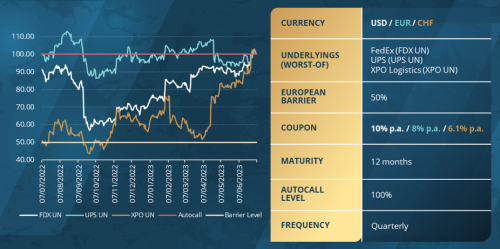
BRC Autocallable | Product Snapshot
For informational purposes only. Not investment advice.